PJ Trailers 5×10 Towing Hitch Setup Guide
Setting up the towing hitch on a PJ Trailers 5×10 is a critical step that ensures safety, stability, and compliance with Australian towing regulations. This guide walks through the essential aspects of hitch selection, ball sizing, weight distribution, and wiring, so owners can tow with confidence. Whether the trailer is used for landscaping equipment, ATVs, or general hauling, a properly configured hitch system prevents sway, reduces wear on the tow vehicle, and meets legal requirements.
What Size Hitch Ball Is Required for a PJ Trailers 5×10?
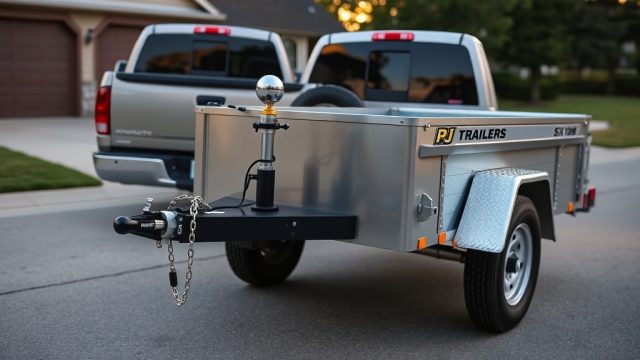
The PJ Trailers 5×10 typically comes with a standard 50mm (2-inch) coupler, which is the most common size for trailers in Australia. The coupler is designed for a 50mm hitch ball, and using the correct ball size is mandatory for safe towing. A ball that is too small will allow the coupler to detach, while one that is too large will not engage properly. Most PJ Trailers 5×10 models feature a 2-inch coupler, but owners should verify the exact spec on the coupler’s stamped rating. The ball must be rated for the trailer’s Gross Trailer Mass (GTM), which for this model ranges between 1,800 kg and 2,500 kg depending on the build. A 50mm ball with a minimum rating of 3,500 kg is recommended to provide a safety margin.
- Always match the ball size to the coupler’s marked diameter—usually 50mm for PJ 5×10.
- Use a chrome or forged hitch ball to resist corrosion from weather and road salt.
- Check the ball’s shank diameter; most Australian tow bars use a 3/4-inch or 1-inch shank.
- Tighten the ball nut to the manufacturer’s torque spec (typically 150-200 Nm for 50mm balls).
What Type of Tow Hitch Is Recommended for This Trailer?
PJ Trailers 5×10 units are designed for a ball-type hitch, specifically a 50mm tow ball mounted on a standard tow bar. For light-duty towing (under 2,000 kg GTM), a standard 50mm tow bar with a load-distributing hitch is sufficient. For heavier loads near the 2,500 kg GTM limit, a weight distribution hitch (WDH) is strongly advised. A WDH uses spring bars to transfer some of the trailer’s tongue weight to the front axle of the tow vehicle, improving steering and braking stability. Many owners of the PJ 5×10 also use a sway control device, especially when towing in strong crosswinds or on highways. The hitch receiver on the tow vehicle should be rated for at least 2,500 kg if towing the maximum payload. For a complete overview of the trailer’s floor construction, see the PJ Trailers 5×10 Floor Material and Construction Review.
| Hitch Type | GTM Range (kg) | Ball Size (mm) | Recommended for PJ 5×10 |
|---|---|---|---|
| Standard ball hitch | 1,500 – 2,000 | 50 | Yes, for light to medium loads |
| Weight distribution hitch | 1,800 – 2,500 | 50 | Yes, for heavy loads or long trips |
| Fifth-wheel hitch | N/A | N/A | No, not compatible with coupler |
| Pintle hook | N/A | N/A | No, not designed for this model |
How Do You Calculate the Correct Tongue Weight for the PJ 5×10?
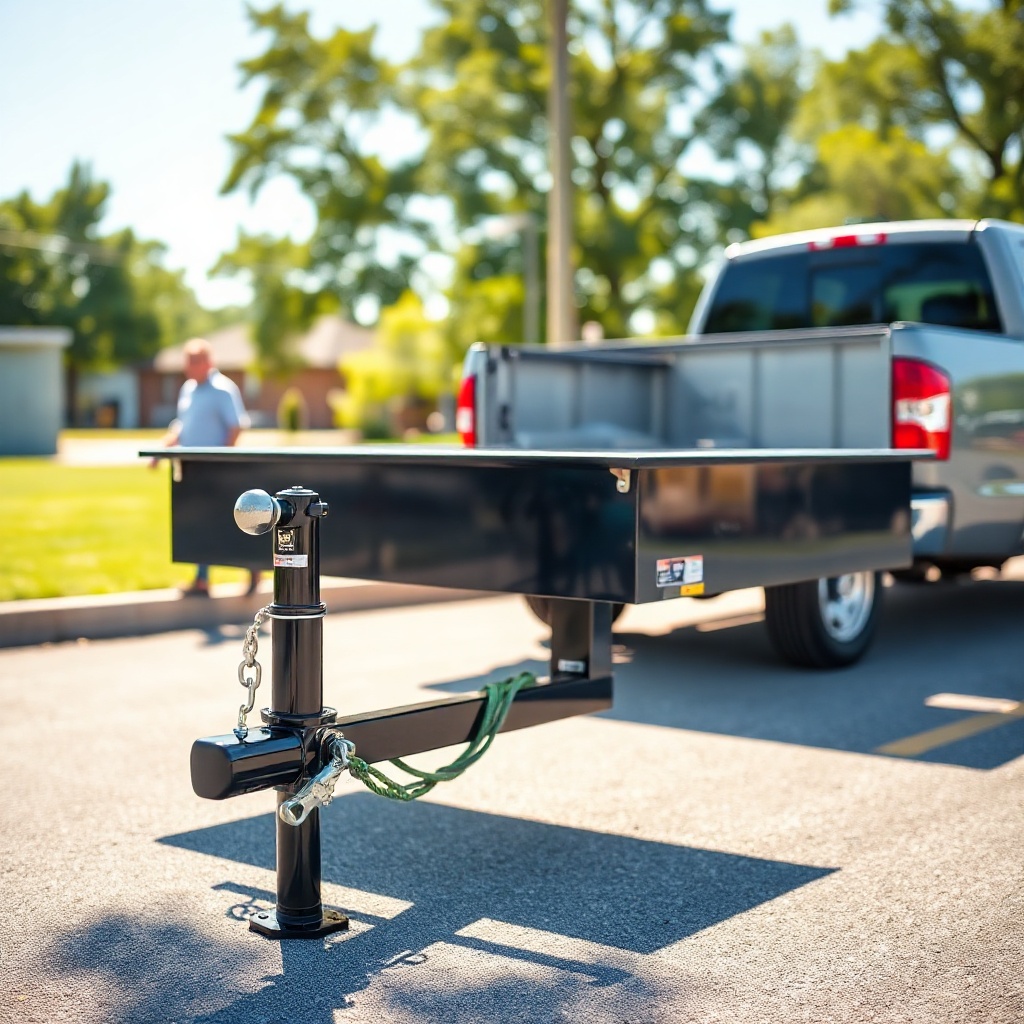
Tongue weight, also known as the download on the tow ball, should be between 10% and 15% of the trailer’s loaded weight. For a PJ Trailers 5×10 with a GTM of 2,000 kg, the ideal tongue weight is 200–300 kg. If the tongue weight is too low (under 10%), the trailer may sway dangerously at speed. If it exceeds 15%, the tow vehicle’s rear suspension may sag, reducing steering control. To measure tongue weight, use a tongue weight scale or a standard bathroom scale with a block and lever system. Adjust the load position on the trailer—place heavier items slightly forward of the axles to increase tongue weight, or move them rearward to decrease it. Remember that the PJ 5×10 has a low deck height, which can make loading easier, but be cautious not to overload the tongue beyond the hitch’s rated limit. For loading tips, refer to the PJ Trailers 5×10 Ramp Options and Loading Tips guide.
What Safety Chains Setup Is Required for This Trailer?
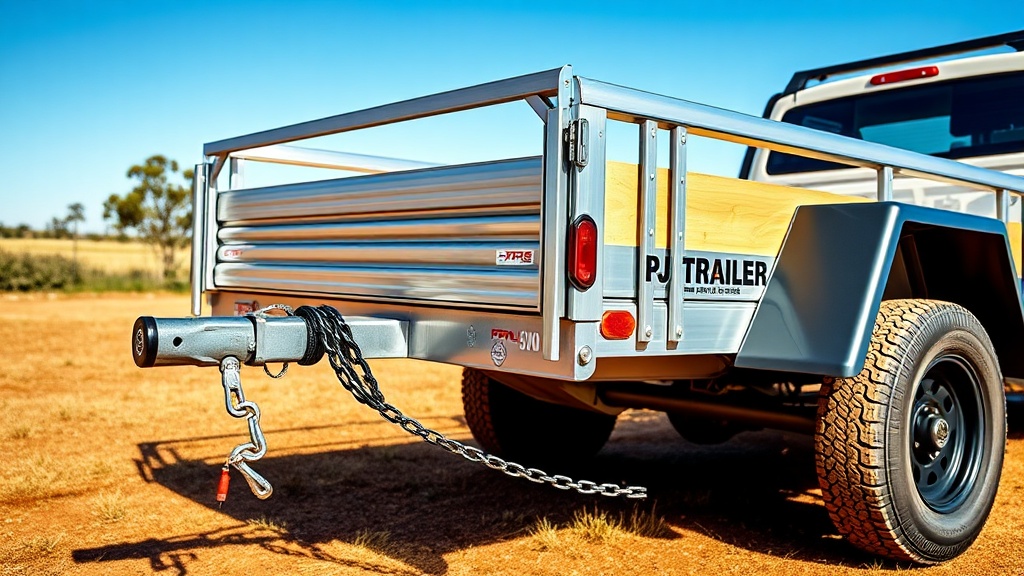
Australian regulations require at least two safety chains for trailers over 750 kg GTM, and the PJ 5×10 typically exceeds this. The chains must be crossed beneath the coupler to form a cradle that catches the trailer tongue if it detaches from the ball. Each chain should have a breaking strength at least equal to the GTM of the trailer. For a 2,000 kg GTM, chains rated at 2,000 kg each are recommended, though many owners use 2,500 kg chains for extra margin. Attach the hooks to the tow vehicle’s designated safety chain loops—never to the hitch receiver itself, as this can allow the trailer to drop. Make sure the chains have minimal slack but enough length to allow tight turns without binding. Inspect chains regularly for wear, rust, or kinked links; replace them if damaged. For maintenance advice, check the How to Maintain and Rust-Proof Your PJ Trailers 5×10 guide.
How Do You Wire the Trailer’s Electrical Connector for Towing?
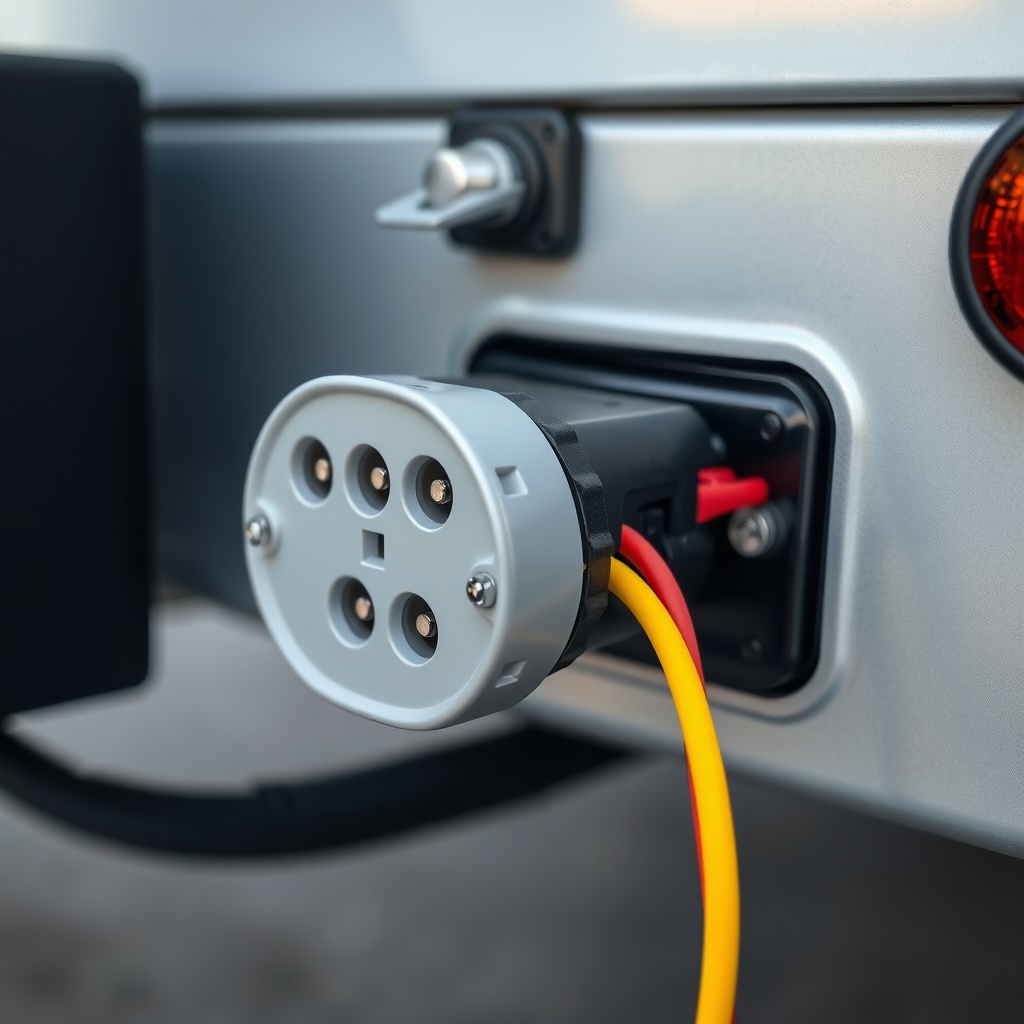
The PJ Trailers 5×10 comes with a standard 7-pin flat connector in Australia (though some models use a 7-pin round). The wiring includes left turn, right turn, tail lights, brake lights, reversing lights, and a ground wire. A 12V auxiliary pin is also available for accessories like interior lights or battery charging. To wire the connector to the tow vehicle, use a vehicle-specific wiring harness or a universal 7-pin plug adapter. Ensure that the ground wire is securely connected to the trailer’s chassis, as a poor ground is the most common cause of faulty trailer lights. Test all functions before each trip: activate left and right indicators, brake lights, and tail lights while someone observes the rear. If using a 7-pin to 5-pin adapter, verify that the brake light circuit is not swapped with the tail light circuit. For a comparison of PJ with other brands, see the PJ Trailers 5×10 vs Wells Cargo 6×12: Which Is Better? article.
What Owners Say
Owners of the PJ Trailers 5×10 consistently highlight the importance of getting the hitch setup right from day one. One owner in Queensland reported that using a weight distribution hitch eliminated sway that previously occurred when towing a heavy load of bricks. Another from Victoria noted that the standard 50mm ball fit perfectly but recommended upgrading to a forged ball with a security clip to prevent theft. Several owners caution against using a cheap ball, as even slight wear can cause the coupler to rattle. Many praise the low deck height for easy loading but remind new buyers to adjust the tongue weight before the first trip. Overall, the consensus is that proper hitch setup makes the PJ 5×10 a reliable and stable trailer, but skipping these steps can lead to dangerous handling on the road.
Frequently Asked Questions
- Do I need a weight distribution hitch for my PJ Trailers 5×10?
For loads up to 2,000 kg GTM, a standard ball hitch is acceptable. For loads near the maximum 2,500 kg GTM, or for highway towing, a weight distribution hitch is strongly recommended to improve stability. - What size ball do I need for a 2023 PJ 5×10?
Most models use a 50mm (2-inch) ball. Check the coupler’s label to confirm, as some older models may use 1-7/8-inch (48mm) or 2-5/16-inch (59mm) balls, though this is rare. - Can I tow a PJ 5×10 with a standard Australian SUV?
Yes, provided the SUV has a tow rating of at least 2,500 kg and the correct tow bar. Popular vehicles include Toyota Hilux, Ford Ranger, and Mitsubishi Triton, among others. - How do I fix a loose coupler on the trailer?
Loosen the coupler’s locking nut, adjust the mechanism to fit snugly around the ball, and retighten. If excessive play persists, the coupler may need replacement. - What is the best brand of hitch ball for this trailer?
Forged steel balls from brands like Hayman Reese or TJM are recommended for durability and corrosion resistance. Chrome-plated balls are also reliable, but inspect for flaking. - Should I use safety chains if I have a weight distribution hitch?
Yes, safety chains are legally required regardless of hitch type. They act as a backup in case of ball failure and must be crossed and attached properly.
For ongoing care and rust prevention, review the PJ Trailers 5×10 Maintenance and Rust Prevention Guide.