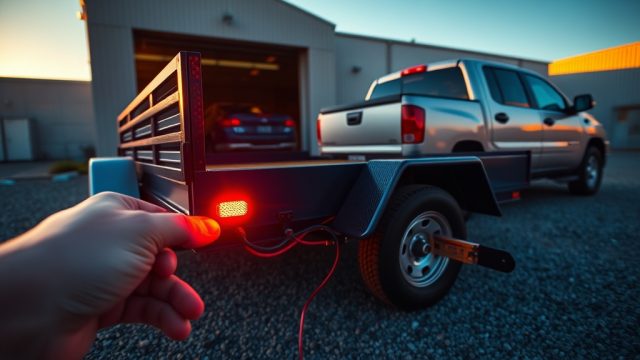

Wells Cargo 6×12 Lighting and Wiring Troubleshooting
When your Wells Cargo 6×12 trailer lights go dark or the wiring acts up, it can stall a hauling day fast. Whether it’s a dead taillight, flickering turn signals, or a blown fuse on a 7-pin connector, this guide covers the common electrical gremlins owners face. We’ll walk through the most frequent causes, fix-it steps, and what the community says about keeping your trailer’s lighting system reliable.
Why Are My Wells Cargo 6×12 Tail Lights Not Working?
The first place to check on a Wells Cargo 6×12 Utility Trailer is the ground connection. Most 6×12 models use a 4-pin or 7-pin flat connector, and the white wire is the ground. If that wire has a poor connection at the tongue or at the light housing, the whole circuit goes dead. Inspect the ground wire bolted to the trailer frame near the coupler. Remove any rust or paint, and tighten the screw to bare metal.
Next, look at the 7-pin connector itself. Corrosion or bent pins can cause intermittent or complete failure. Use a multimeter set to 12V DC; probe the pin for the tail light circuit (usually pin 3 on a 7-pin RV-style connector) while the tow vehicle’s parking lights are on. No voltage? The issue might be on the vehicle side or the connector wiring. If voltage is present, the problem is inside the trailer wiring harness.
Finally, check the light sockets for corrosion or broken bulb contacts. The sealed LED units on newer Wells Cargo trailers are more reliable, but older incandescent bulbs can burn out or have bad sockets. A quick clean with a wire brush and dielectric grease can fix many ground-related issues.
How to Fix a Blown Fuse on a Wells Cargo 6×12 7-Pin Wiring System?
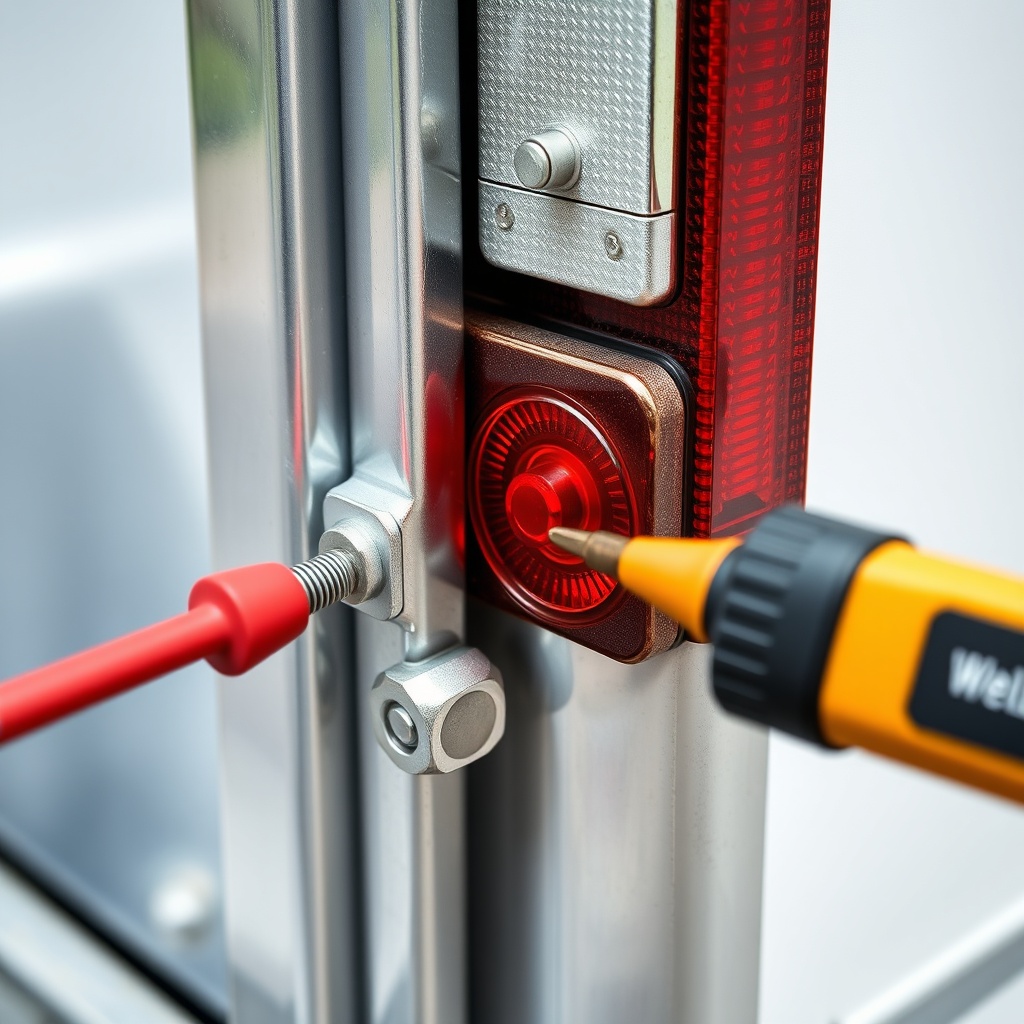
If your 7-pin connector blows a fuse as soon as you plug in, it usually indicates a short circuit between the hot wire (e.g., brown for tail lights) and the ground wire. On a Wells Cargo 6×12, the most common short locations are:
- Where wires rub against the trailer frame near the rear crossmember or fenders.
- Inside the junction box (typically a weatherproof box mounted under the front of the trailer).
- At the 7-pin connector itself, if a pin is bent and touching another.
Start by disconnecting the trailer from the tow vehicle. Use a multimeter on continuity mode (or resistance, ohms). Probe the brown tail-light wire and a known good ground. If you get a low resistance reading (near 0 ohms), there’s a short. Trace the green, brown, and yellow wires from the front junction box toward the rear lights. Look for chafed insulation where wires pass through frame holes—add a rubber grommet if missing.
If you find a short in the main harness, splicing in a replacement section of 16-gauge automotive wire with heat-shrink butt connectors is the proper fix. Avoid using cheap twist-on connectors; they corrode quickly on a trailer.
How Do You Test the Wiring on a Wells Cargo 6×12 Trailer?
Testing the entire wiring system on your Wells Cargo 6×12 involves a systematic approach with a multimeter and a 12V test light. Here’s a step-by-step process many owners follow:
| Severity Level | Typical Issue |
|---|---|
| Usually Not Urgent | Intermittent taillight flicker caused by a loose ground wire or corroded 4-pin connector. You can usually tighten or clean it and drive home safely, but should fix within a few trips. |
| Needs Attention Soon | Complete loss of brake lights or turn signals, blown fuse on every attempt. This indicates a short circuit that risks damaging the tow vehicle’s electrical system or causing a safety hazard. Fix before next long haul. |
For a thorough test, connect the trailer to a known-good tow vehicle. Activate each circuit one at a time: left turn, right turn, brake, tail, reverse. If a circuit fails, go to the rear of the trailer and remove the light housing. Check for voltage at the socket with a test light while the circuit is active. No voltage means the break is between the connector and the light.
If you have a sealed LED system, the entire light pod often needs replacement if one circuit fails—no bulb swap possible. However, check the wiring to the pod first; sometimes the connector corrodes at the pod junction, not the pod itself.
What Causes Flickering LED Lights on My Wells Cargo 6×12?
Flickering LED lights on a Wells Cargo 6×12 are usually not a bulb issue; LEDs are more sensitive to voltage fluctuations and poor grounds. Common causes include:
- Insufficient ground connection at the trailer tongue—the white wire must be bolted to clean, bare metal.
- A weak or failing trailer battery if you have electric brakes with a breakaway system. The battery can cause voltage drops when the brakes energize.
- A bad connection inside the 7-pin connector—especially the ground pin (pin 2 on a standard 7-pin RV connector). Corrosion increases resistance, causing flicker.
- Low voltage from the tow vehicle’s alternator or a bad trailer wiring plug on the vehicle side.
To troubleshoot, start by cleaning all ground connections with a wire brush and applying dielectric grease. Then measure voltage at the trailer’s rear lights while the engine runs at idle. You should see at least 12.5V. If it drops below 11V when you turn on the lights, check the ground path and the battery. Some owners upgrade the ground wire to a heavier 12-gauge wire directly from the tongue to the rear lights for a more stable connection.
How to Replace a Faulty Junction Box on a Wells Cargo 6×12?
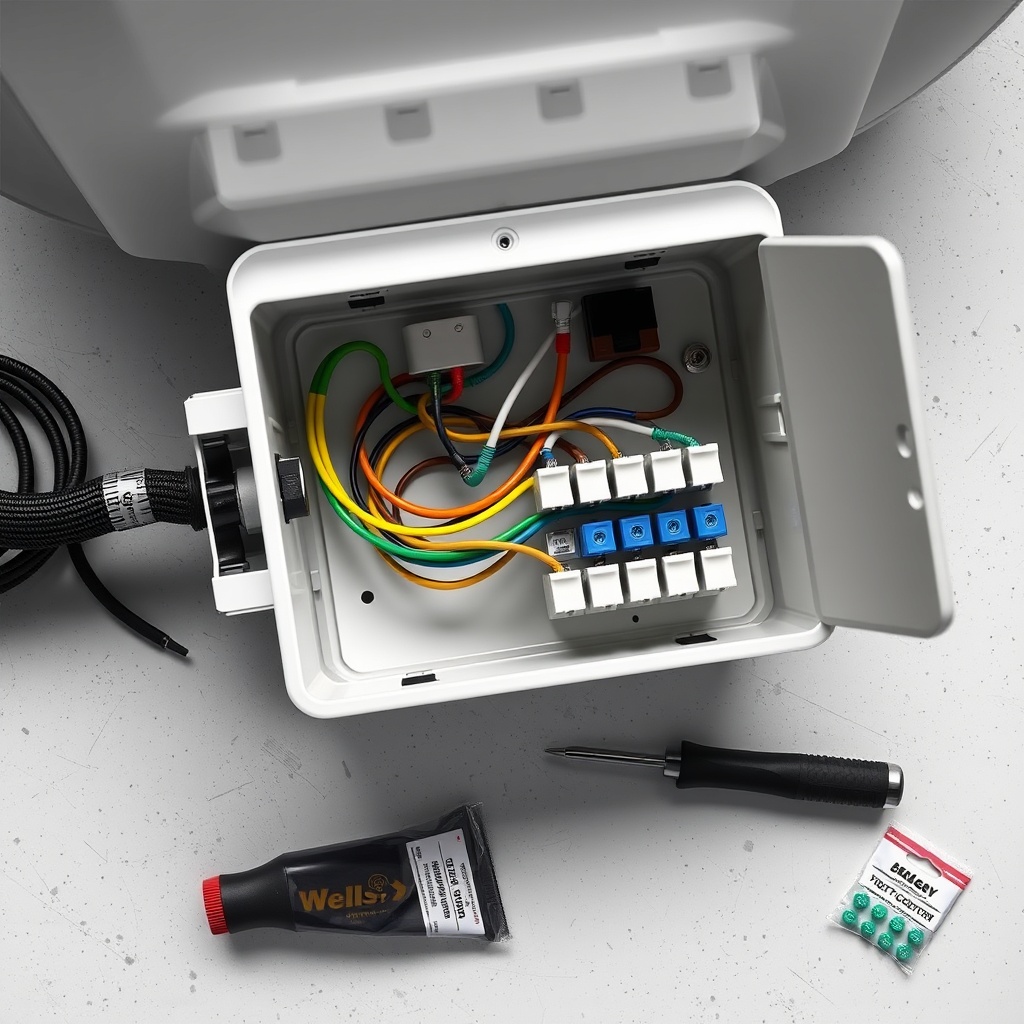
The junction box on many Wells Cargo 6×12 trailers is a sealed unit mounted near the coupler. If water gets inside, corrosion eats the terminals. To replace it, disconnect the trailer from the tow vehicle and remove the battery if equipped. Use a 7/16-inch socket to remove the lid screws. Take photos of the wire positions before disconnecting. Each wire should be marked: white (ground), brown (tail), green (right turn/brake), yellow (left turn/brake), blue (electric brakes), red or black (12V accessory).
Purchase a replacement junction box rated for 6-7 circuits (around £20–£35 or $25–$45 in U.S., depending on your region). Splice in new wires if the old ones are corroded near the box. Use heat-shrink butt connectors and dielectric grease to seal each connection. Mount the new box in the same location, ensuring the rubber gasket seals properly. Test all lights afterward.
If the junction box has melted terminals, you likely had a short circuit that overheated it. In that case, also inspect the entire wiring harness for damage. Replacing the box without fixing the underlying short will only cause a repeat failure.
What Owners Say About Wells Cargo 6×12 Lighting and Wiring
After chatting with several owners in online forums and at trailer service shops, here’s what we’ve heard about the 6×12 model’s electrical system:
- “The biggest issue is the ground wire at the tongue. Once I ground it to bare metal, all my issues went away.” This is the most common fix—many owners sand the paint off the frame where the ground bolt goes.
- “I upgraded to LED lights because the incandescent bulbs kept burning out. The wiring itself is fine, just the bulbs were cheap.” A popular upgrade, costing about £30–£50 for a complete LED replacement set.
- “The factory wiring uses 18-gauge wire in some spots—it’s okay for lights but can’t handle much else. If you add extra accessories, run heavier wire.” Owners who add interior lights or power inverters often rewire with 14-gauge.
- “My 7-pin connector had a bent pin from a bad hookup. That was the whole problem.” A bent pin is easy to miss but causes a short. Straighten carefully with needle-nose pliers.
Overall, owners find the wiring adequate for standard use, but payload considerations play a role—if you overload the trailer, the extra weight can stress the wiring connections at the tongue due to frame flex. Keep your load within the rated capacity to avoid that.
Frequently Asked Questions
How do I know if my Wells Cargo 6×12 has LED or incandescent lights?
Look at the light lens. LED lights have multiple small diodes visible inside the lens, while incandescent bulbs have a single filament bulb. Also, LED lights produce a pure white or red light, while incandescent bulbs have a warmer, yellow tint. Most new Wells Cargo trailers now use sealed LED pods.
Can I replace incandescent bulbs with LEDs on a Wells Cargo 6×12?
Yes, but you must replace the entire light assembly for a clean fit. Universal LED replacement lights cost £20–£40 per pair. Make sure to buy ones that have the correct mounting pattern and seal gasket. Also, verify your tow vehicle has a resistor-compatible flasher if you replace turn signals, or install load resistors to prevent hyperflash.
What fuse rating should I use for the trailer lighting circuit?
The typical 7-pin connector uses a 20-amp fuse on the tow vehicle’s lighting circuit for the tail lights. The brake/turn circuit may have a 15-amp fuse. Check your vehicle’s manual. If you add LED lights, you can often keep the same fuse, but if you add accessories like interior lights, you may need a higher-rated fuse.
Why do my trailer brakes lock up when I connect the 7-pin plug?
If the brakes lock up, you likely have a short in the blue brake wire. Check where the blue wire connects to the breakaway switch. Also, inspect the brake magnets themselves—a magnet with an internal short can cause full brake engagement. Use a multimeter to test resistance between the blue wire and ground; it should read about 3–4 ohms per brake magnet.
How often should I inspect the wiring on my Wells Cargo 6×12?
Inspect the wiring at least once per season, or every 3,000 miles, whichever comes first. Pay close attention to areas where wires rub against metal, especially at the tongue, fender mounting points, and rear crossmember. Corrosion on the 7-pin connector should be cleaned with contact cleaner at every oil change interval.
Can I add an interior light to my Wells Cargo 6×12 using the existing wiring?
Yes, if you have a 7-pin connector, you can use the 12V accessory pin (often the black wire) to power interior lights. Wire a simple on-off switch and a 12V light strip. Do not exceed 5 amps from that circuit unless you run a separate fused line from the battery. Typical interior LED strips draw about 0.5 to 1 amp, which is safe.