How Do PJ Trailers 5×10 Ramps Compare to Standard Drop-Down Options?
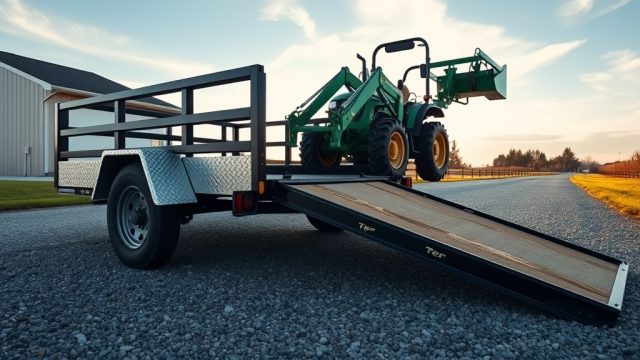
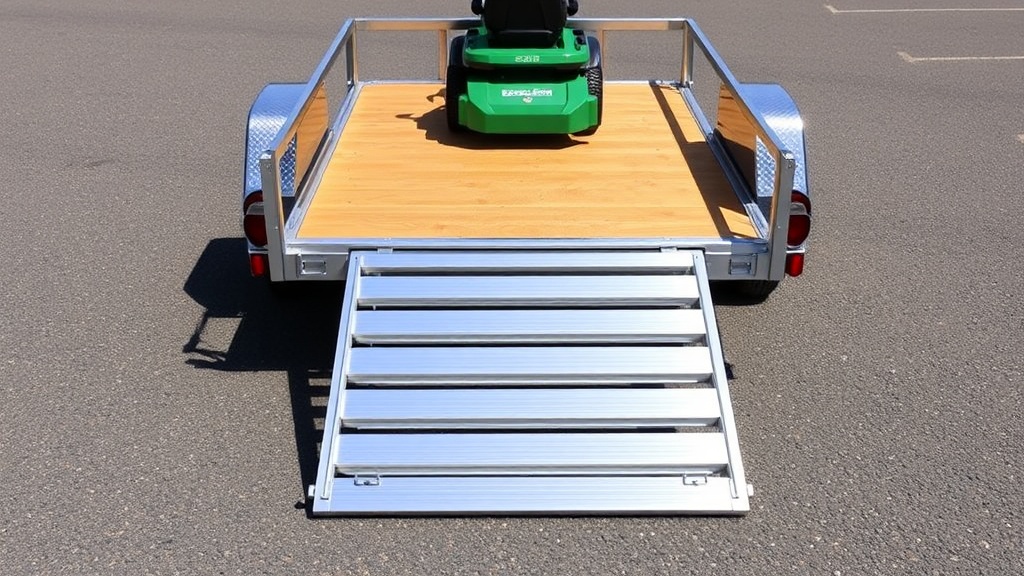
When you first look at a PJ Trailers 5×10, the ramp setup is one of the most critical features. Unlike many budget trailers that rely on a simple drop-down tailgate, PJ offers dedicated ramp systems designed for both durability and ease of use. The standard is a spring-assisted 5-foot-long aluminum ramp, which reduces the manual lifting effort significantly. This is particularly helpful when loading heavier items like a riding mower or a motorcycle. The ramp hinges at the rear crossmember, and when not in use, it stores vertically against the rear header, secured by heavy-duty latches. For owners frequently loading from the rear, the PJ ramp is a clear upgrade over the multi-position drop gate found on some competitors. While the drop gate offers a platform for equipment access, the dedicated ramp eliminates the awkward step-over, providing a continuous path from ground to bed. You’ll find the spring assist reliable even after years of use, which speaks to PJ’s attention to component selection. However, understand that this is a one-piece ramp, so if you need side-by-side loading for narrow vehicles, you may want to explore optional bi-fold ramps that some dealers offer as an add-on.
What Are the Weight Limits for the Standard Ramp on a PJ Trailers 5×10?
The standard aluminum ramp for the PJ Trailers 5×10 is rated to handle up to 2,500 pounds distributed load. However, this is a dynamic figure that depends on how you position the load. If you are loading a tracked skid-steer or a mini-excavator, you need to pay close attention to the contact patches. The ramp’s structural integrity comes from its extruded aluminum construction with internal cross-bracing. PJ’s engineering targets a safety factor of at least 1.5 times the rated capacity, so a 2,500-pound ramp will withstand short-duration peaks closer to 3,750 pounds. But for regular use, you should stay under the 2,500-pound mark to avoid fatigue over time. A common mistake is loading a heavy machine with narrow wheels, such as a compact tractor with ag tires. The concentrated load can dent the ramp’s surface, even if the total weight is fine. To mitigate this, PJ recommends using plywood or steel plates on the ramp surface when loading equipment with narrow tracks. This spreads the weight across multiple crossmembers. For the 5×10 model, the ramp’s width matches the trailer’s rear opening, which is about 60 inches. This is ample for most lawn and garden equipment but might be tight for larger utility vehicles. Always check the PJ Trailers 5×10 Floor Material and Construction Review for more on how the ramp integrates with the floor’s structural integrity.
How Should You Load a Heavy Zero-Turn Mower on a PJ Trailers 5×10?
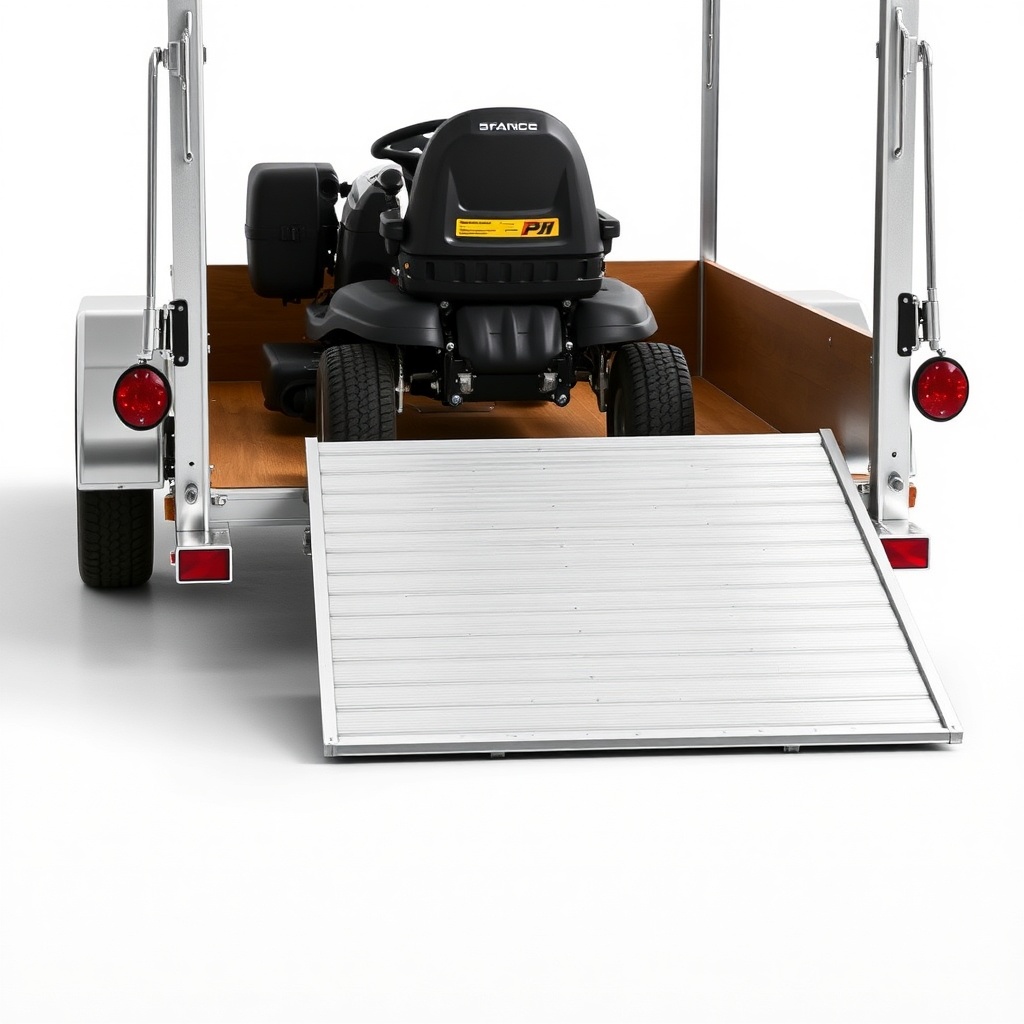
Loading a zero-turn mower onto a PJ Trailers 5×10 requires a methodical approach to avoid damaging both the ramp and the machine. Start by positioning the trailer on a level surface, ideally on concrete or firm gravel. Engage the trailer’s parking brake and block the wheels on both sides. For the PJ 5×10, the ramp’s spring assist makes lowering a one-handed operation, but you must ensure the latch pins are fully released before lowering. Many owners suggest entering the ramp at a slow, steady speed—don’t gun the engine. The key is to have the mower’s deck fully raised to avoid scraping the ramp’s edges. Once the mower’s front wheels are on the trailer floor, stop and shift your weight to the back. The center of gravity of a zero-turn is relatively high, so you should avoid turning sharply on the ramp. After the mower is fully aboard, chock its wheels and use tie-down straps across the machine’s frame—not just around the wheel arms. Anecdotally, owners report that the aluminum ramp feels bouncy under a heavy zero-turn, but that’s normal due to its flexibility. If you experience excessive bounce, consider an optional solid ramp insert or a bi-fold ramp for more rigidity. For ongoing care of the ramp mechanism, see the How to Maintain and Rust-Proof Your PJ Trailers 5×10 article.
What Are the Best Tie-Down Points on a PJ Trailers 5×10 for Ramp Loading?
Once you have the load on the ramp and onto the bed, securing it is the next critical step. The PJ Trailers 5×10 comes with a set of D-ring tie-downs embedded in the floor. There are typically four D-rings—one near each corner. For ramp loading, you’ll want to attach your ratchet straps to the rings closest to the load. A common issue during ramp loading is that the load shifts forward as you drive up, so you need to pre-load the straps from the rear D-rings to the front of the machine. This prevents the load from sliding back when you drive uphill or during sudden stops. For a 5×10 trailer, the rear D-rings are located about 12 inches from the rear edge. When loading a long machine like a zero-turn, the rear tie-down is often behind the machine’s back wheels. To access it, you may need to step onto the trailer. A helpful trick is to attach the rear straps before driving the machine fully forward, then tighten them after the machine is in place. Also, use straps rated for at least 3,000 pounds each, and avoid using the ramp itself as a tie-down point—it’s not designed for that. For more on securing different loads, check the PJ Trailers 5×10 vs Wells Cargo 6×12: Which Is Better? comparison for tie-down system differences.
| Situation | Description and Action |
|---|---|
| Ramp feels wobbly or bouncy during loading | Usually not urgent – check ramp hinges and spring attachment bolts for tightness. Lubricate pivot points to reduce friction. |
| Ramp latches won’t fully secure the ramp in the stored position | Needs attention soon – lubricate latch mechanism and adjust the ramp’s storage bracket. If the latch is bent, replace it before heavy use. |
| Ramp surface has small dents from narrow tires | Usually not urgent – no structural concern. Use plywood strips over dents to prevent further deformation. Monitor for cracking. |
| Springs fail to assist ramp during lowering or raising | Needs attention soon – check if cables are frayed or if the spring has lost tension. Replace spring assembly immediately. |
Can You Upgrade the Ramp on a PJ Trailers 5×10 to a Bi-Fold or Ramp Gate?
Yes, you can upgrade the standard single-piece ramp to a bi-fold or ramp gate system, but there are some compatibility caveats. PJ Trailers offers a factory bi-fold ramp option on certain 5×10 models, but it’s not a universal aftermarket part. The bi-fold ramp splits in the middle, folding outward, which reduces the length needed for loading and allows you to have a tailgate that can be used as a work platform or for driving up. The retrofit usually requires drilling into the rear crossmember and modifying the hinge brackets. Many owners opt for a ramp gate aftermarket product from companies like Rampage or Kodiak, but you must ensure the gate’s width matches the PJ 5×10’s 60-inch opening. The standard PJ ramp is about 5 feet long; a bi-fold ramp might be 6 feet, which reduces the loading angle. This is easier on the machine’s suspension but requires more space to deploy. Cost for a quality bi-fold ramp replacement is between $500 and $800, depending on material and spring quality. If you frequently load heavy tracked equipment, a bi-fold ramp is a worthwhile upgrade for improved rigidity. However, for occasional use with light equipment, the standard ramp is perfectly adequate. Keep in mind that aftermarket ramp gates may void PJ’s warranty on the rear frame if not installed by an authorized dealer.
What Are Common Mistakes When Loading a PJ Trailers 5×10 in Wet Conditions?
Loading in wet conditions on a PJ Trailers 5×10 presents several risks that can be mitigated. The aluminum ramp surface can become slippery when wet, especially if it has the standard diamond-plate pattern. Mud or grass clippings on the ramp exacerbate traction loss. The most common mistake is not cleaning the ramp before loading. A quick spray with a hose or a push broom can remove debris. Another error is failing to adjust tire pressure for wet grass—lower pressure usually improves grip on the ramp. The trailer’s floor, if made of smooth metal, can also be slippery. Some owners add rubber matting to the floor, which helps traction and also dampens noise. When loading up a wet ramp, use a low gear and go straight, avoiding any steering input until you are on level ground. The ramp’s spring assist can be a hazard in wet conditions if the ramp’s latch is stuck due to corrosion—always check the latch before lowering. After a wet loading session, always rinse the ramp hinges and latch area to prevent rust buildup, as water can get trapped in the pivot points. For a full maintenance schedule on preventing corrosion, consult our How to Maintain and Rust-Proof Your PJ Trailers 5×10 guide. Also, consider the PJ Trailers 5×10 vs Wells Cargo 6×12: Which Is Better? for insights on how different trailers handle wet conditions.
What Owners Say About PJ Trailers 5×10 Ramps
From forums and owner groups, the feedback on the PJ 5×10 ramp is generally positive. Owners appreciate the low-maintenance nature of the aluminum ramp. One owner with a Kubota zero-turn noted, “The spring assist makes a huge difference when I’m loading alone. I can lower the ramp with one hand while holding the mower handle with the other.” Another owner who hauls construction debris mentioned that the ramp’s wide width allows him to back a Bobcat up without worrying about going off the side. A recurring suggestion is to add reflective tape to the ramp edges for visibility during low-light loading. Some owners who upgraded to a bi-fold ramp reported that the standard single-piece ramp can be long enough to scrape on steep driveway aprons—a compromise of the standard design. Overall, owners recommend the PJ ramp for ease of use, but advise checking the spring tension annually as part of a PJ Trailers 5×10 Floor Material and Construction Review.
Frequently Asked Questions
How long is the standard ramp on a PJ Trailers 5×10?
The standard aluminum ramp on a PJ Trailers 5×10 is 5 feet in length, which provides a gradual slope for most lawn and garden equipment without needing a separate ramp extender.
Is the PJ 5×10 ramp compatible with tracked vehicles?
Yes, but you should use plywood or steel plates on the ramp surface to spread the weight of narrow tracks. The ramp’s structural rating of 2,500 pounds is sufficient for most compact track loaders under that weight.
Can I remove the ramp for a drop-down tailgate conversion?
Technically yes, but it’s not recommended. The PJ 5×10 frame is built to accommodate a ramp, not a tailgate. Removal would leave exposed hinges and no proper tailgate latch points.
Why does my ramp bounce when I drive a heavy machine over it?
Aluminum ramps have inherent flexibility. When loading a machine over 1,500 pounds, the ramp will flex slightly. This is normal. For heavy loads, consider a bi-fold or steel ramp with additional cross-supports.
How do I adjust the spring tension on the ramp?
Spring tension is typically adjusted by moving the spring attachment point on the hinge bracket. Refer to the owner’s manual for exact procedure. Over-tensioning can cause the ramp to snap upward during raising.
Where can I buy a replacement ramp for a PJ Trailers 5×10?
Replacement ramps can be sourced directly from PJ Trailer dealers or online trailer parts retailers such as TrailerPartDotCom or Eastern Marine. Ensure the replacement matches the 60-inch width and hinge spacing.