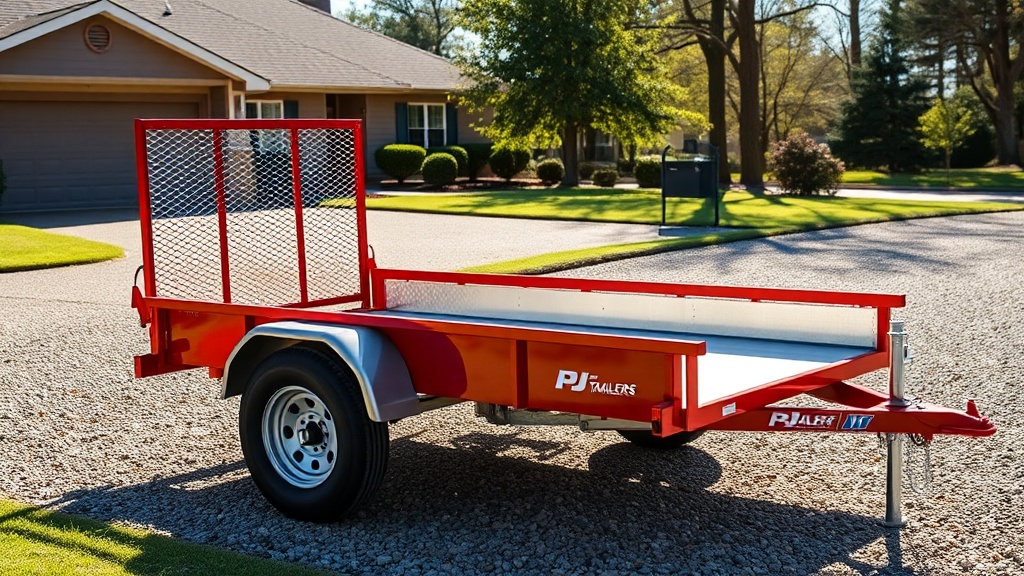
PJ Trailers 5×10 weight capacity is a critical specification that determines how much cargo can be safely transported without exceeding the trailer’s design limits or compromising towing stability. Understanding this capacity, along with proper loading techniques, ensures safe operation for both personal and commercial use. This guide provides detailed weight specifications, loading strategies, and real-world advice for maximizing your PJ Trailers 5×10 investment.
What Is the Maximum Payload Capacity of a PJ Trailers 5×10?
The PJ Trailers 5×10 utility trailer typically offers a payload range between 2,000 and 3,500 lbs (907–1,588 kg), depending on the specific axle configuration and frame construction. The standard model with a single 3,500 lb axle has a gross vehicle weight rating (GVWR) of approximately 3,500 lbs. With an empty trailer weight of roughly 900–1,200 lbs, the net payload sits around 2,300–2,600 lbs. Models equipped with tandem 2,000 lb axles increase the GVWR to approximately 4,000 lbs, yielding a payload capacity near 3,000 lbs. Always verify the exact capacity on the trailer’s VIN plate before loading.
How Does the PJ Trailers 5×10 Axle Configuration Affect Weight Capacity?
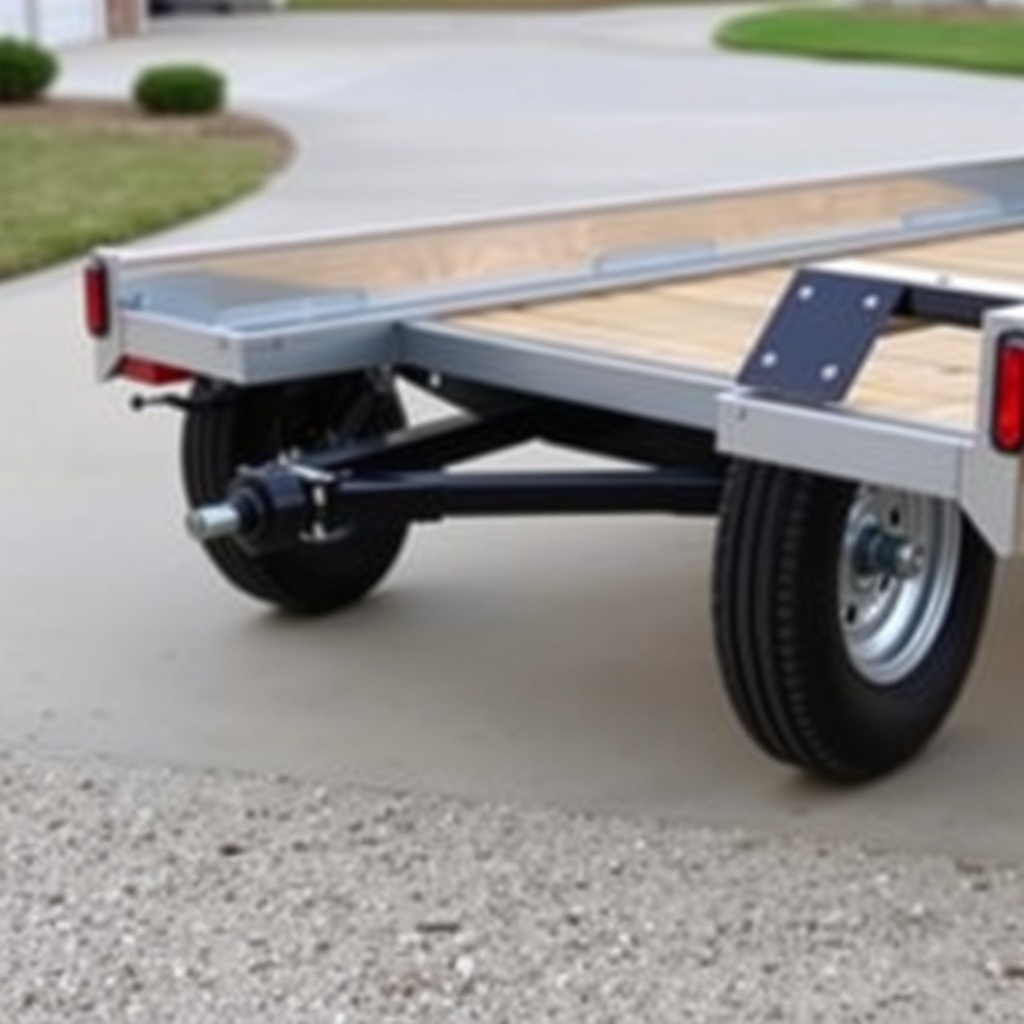
The axle setup directly dictates the maximum load the trailer can handle. Single-axle PJ 5×10 trailers are lighter and easier to maneuver, but they carry less weight. Tandem-axle models distribute the load over two sets of wheels, increasing stability and reducing tongue weight concentration. The table below compares common configurations:
| Configuration | GVWR (lbs) | Empty Weight (lbs) | Payload Capacity (lbs) | Tongue Weight (lbs, 10–15%) |
|---|---|---|---|---|
| Single Axle 3,500 lb | 3,500 | 1,100 | 2,400 | 240–360 |
| Tandem Axle 2,000 lb each | 4,000 | 1,250 | 2,750 | 275–413 |
| Heavy-Duty Single Axle 5,200 lb | 5,200 | 1,350 | 3,850 | 385–578 |
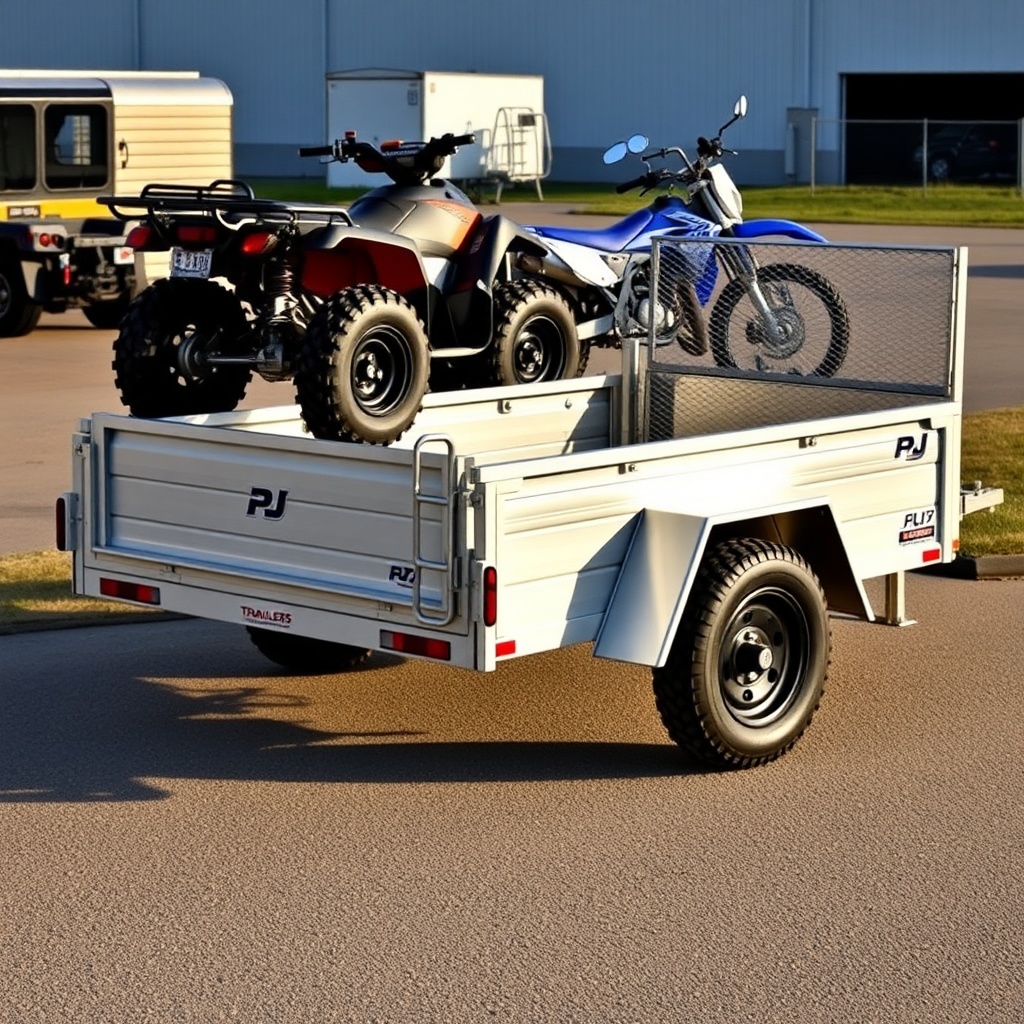
Note that tandem axles also improve braking performance and tire wear under heavy loads. For rugged terrain or frequent heavy hauling, the tandem option is recommended. For light-duty work like landscaping or ATVs, the single axle suffices.
What Are the Best Loading Practices for Optimal Weight Distribution?
Proper loading prevents sway, reduces tire wear, and keeps tongue weight within the 10–15% range of total trailer weight. Start by placing the heaviest items directly over the axles, centered laterally. For a PJ Trailers 5×10, the axles are typically positioned 60–70% from the front coupler. If loading dirt bikes or lawn equipment, secure them with tie-downs to the D-rings bolted into the floor. Distribute weight so the trailer sits level when hitched; if the rear sags, move cargo forward. For loose materials like gravel, install a heavy-duty floor to prevent shifting. Always check tongue weight with a scale: 350 lbs per 3,500 lb GVWR is a safe target.
How Does the PJ Trailers 5×10 Compare to Other Utility Trailers in Weight Capacity?
Within the 5×10 segment, PJ Trailers typically offers superior payload compared to budget brands due to heavier steel framing and thicker leaf springs. A standard PJ 5×10 with a painted steel frame allows 2,400 lbs, while a comparable Wells Cargo 5×10 might top out at 2,000 lbs. However, for larger loads, the PJ Trailers vs Wells Cargo 6×12 comparison shows that upgrading to a 6×12 increases payload to over 4,000 lbs. For most users, the PJ 5×10 strikes an ideal balance between size and capacity for towing with a mid-size SUV or half-ton pickup.
What Safety Equipment Affects Weight Handling on a PJ Trailers 5×10?
Several components directly impact safe loading: the trailer’s structural frame, axle rating, springs, and tires. PJ Trailers use 2×3 inch or 2×4 inch steel tube frames, which provide rigidity. The standard tires are ST205/75R15 load range C (1,360 lbs each). Overloading any single component can cause a failure. Additionally, the hitch coupler must match the ball size (typically 2 inches) and handle the GAWR. For towing near maximum capacity, install a weight-distributing hitch, which reduces tongue load on the tow vehicle. Consult the towing hitch setup guide for exact specifications. Also, ensure the trailer’s brakes are functional and breakaway switch is connected.
What Owners Say About the PJ Trailers 5×10 Weight Capacity
Owner feedback on forums and dealer sites consistently praises the PJ Trailers 5×10 for its honest weight ratings and rugged construction. Users transporting ATVs report stable towing at 2,200 lbs without sway. Landscapers appreciate the capacity for two pallets of sod (approx. 2,000 lbs) when properly balanced. Some note that the standard mesh sides add about 150 lbs, so factor that into payload. One owner commented, “I loaded 2,800 lbs of firewood and the PJ handled it like a champ—no sagging.” The main complaint is that the single-axle version can feel bouncy on rough roads at max load, leading many to opt for the tandem upgrade. For long-term durability, regular maintenance and rust protection are recommended to preserve frame integrity, especially if hauling wet materials.
Frequently Asked Questions About PJ Trailers 5×10 Weight Capacity
Q: Can I exceed the payload rating of a PJ Trailers 5×10?
A: No. Exceeding GVWR can cause axle, tire, or frame failure. It also voids the warranty and may be illegal on public roads. Always weigh the loaded trailer.
Q: What is the tongue weight range for a PJ 5×10?
A: Tongue weight should be 10–15% of total trailer weight. For a 3,000 lb load, that’s 300–450 lbs. Too little causes sway, too much stresses the hitch.
Q: How do I find the exact payload capacity for my specific PJ 5×10 model?
A: Look at the VIN plate on the trailer’s tongue or side. It lists GVWR and empty weight. Payload = GVWR minus empty weight. Contact PJ Trailers with the serial number for a detailed spec sheet.
Q: Can I install a third axle on a PJ 5×10 to increase capacity?
A: No. Adding an axle aftermarket is unsafe and illegal. It alters the frame’s structural design and can cause handling issues. Purchase a tandem-axle model from the factory instead.
Q: What happens if I overload the PJ 5×10 by 500 lbs?
A: Risk of tire blowouts, axle bending, and spring failure increases significantly. The trailer may also sway dangerously at highway speeds. Damage from overloading is not covered under warranty.
Q: How does loading wet materials like mulch affect weight capacity?
A: Wet materials can weigh 30–50% more than dry. For example, a cubic yard of mulch weighs 600–800 lbs dry, but up to 1,200 lbs wet. Use the ramp loading tips to safely load heavy items. Always weigh the load if uncertain.