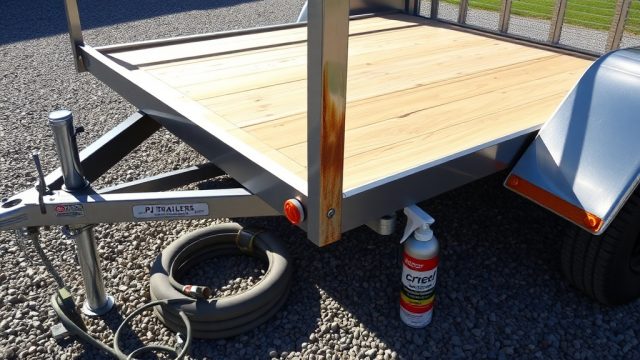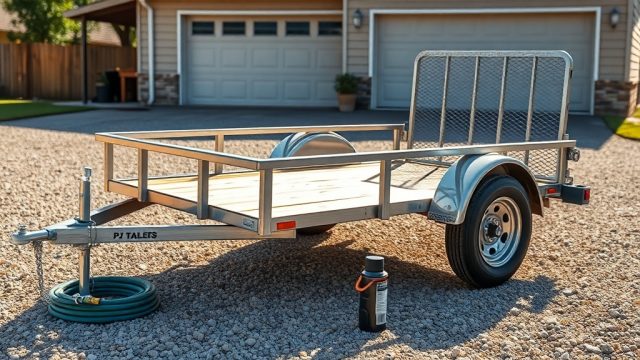
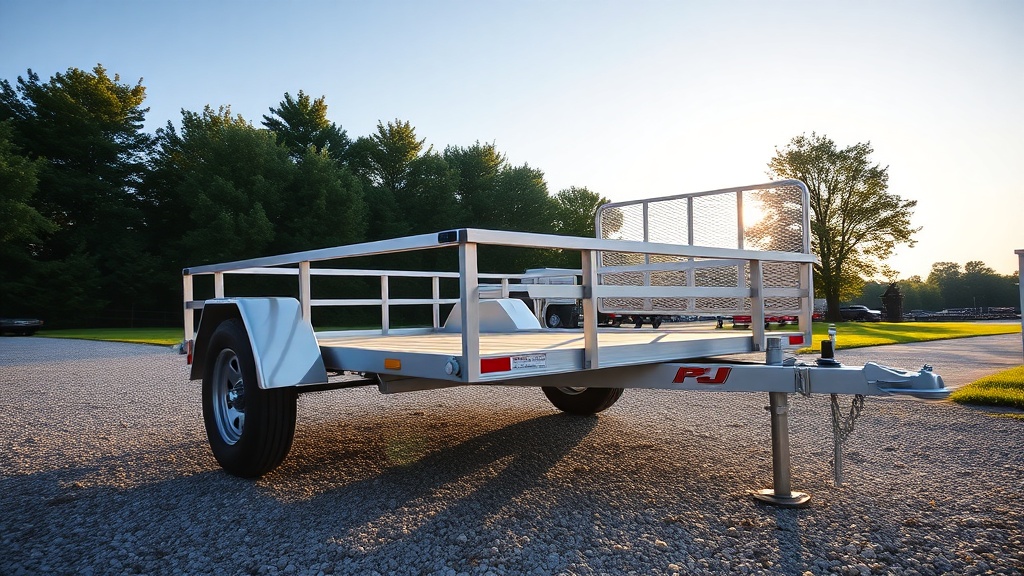
Owning a PJ Trailers 5×10 utility trailer is a solid investment, whether you’re hauling landscaping equipment, ATVs, or building materials. However, the battle against rust is real, especially in regions with salted winter roads or high humidity. Without proper care, corrosion can quickly undermine the structural integrity of the frame, fenders, and floor, leading to costly repairs or premature replacement. This article provides actionable, specific tips to keep your PJ Trailers 5×10 rust-free for years, ensuring your money stays well spent.
Why Does Rust Target the PJ Trailers 5×10 Frame So Aggressively?
The steel frame of a PJ Trailers 5×10 is its backbone, but it’s also the most vulnerable area. Rust forms when moisture, oxygen, and steel combine—an electrochemical reaction accelerated by road salt, mud, and debris trapped in crevices. The boxed channel frame design, common on PJ trailers, creates hidden pockets where water can sit for days after a wash. If you frequently tow in winter conditions, the sodium chloride and calcium chloride used for de-icing are highly hygroscopic, meaning they attract and hold moisture against the metal. Even a small scratch in the factory powder coat can become a corrosion hotspot. Regular inspections and immediate touch-ups are non-negotiable. For a full list of maintenance intervals, see our How to Maintain and Rust-Proof Your PJ Trailers 5×10 guide.
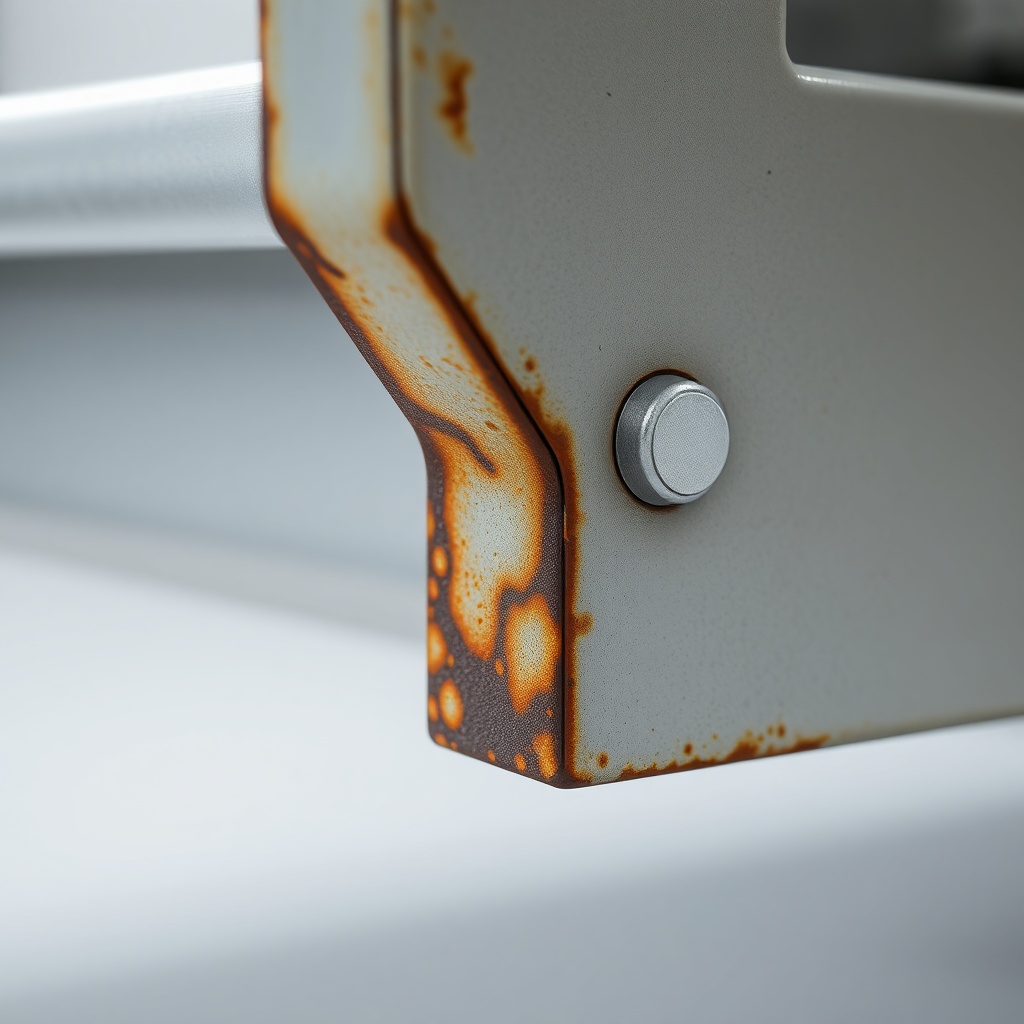
What Are the Must-Do Steps for Undercoating a PJ Trailer 5×10?
Undercoating is the first line of defense, but not all products are equal. For a PJ Trailers 5×10, you want a non-hardening, lanolin-based or wax-based undercoating such as Fluid Film, Woolwax, or PB Blaster Surface Shield. Avoid rubberized undercoatings—they trap moisture underneath and cause blistering. Apply the product to the underside of the frame rails, crossmembers, spring hangers, and the backside of the fenders. The best method: use a spray gun with a wand extension to reach inside boxed channels. Drill small access holes (and plug them afterward with rubber grommets) if your trailer doesn’t have factory drain holes. Reapply annually before winter. Cost: approximately $40–$60 per can, with two to three cans needed for a thorough coat. If you’re comparing options with other brands, our PJ Trailers 5×10 vs Wells Cargo 6×12: Which Is Better? article covers frame differences.
How Should You Clean the Wood Floor to Prevent Rost on the Steel Subframe?
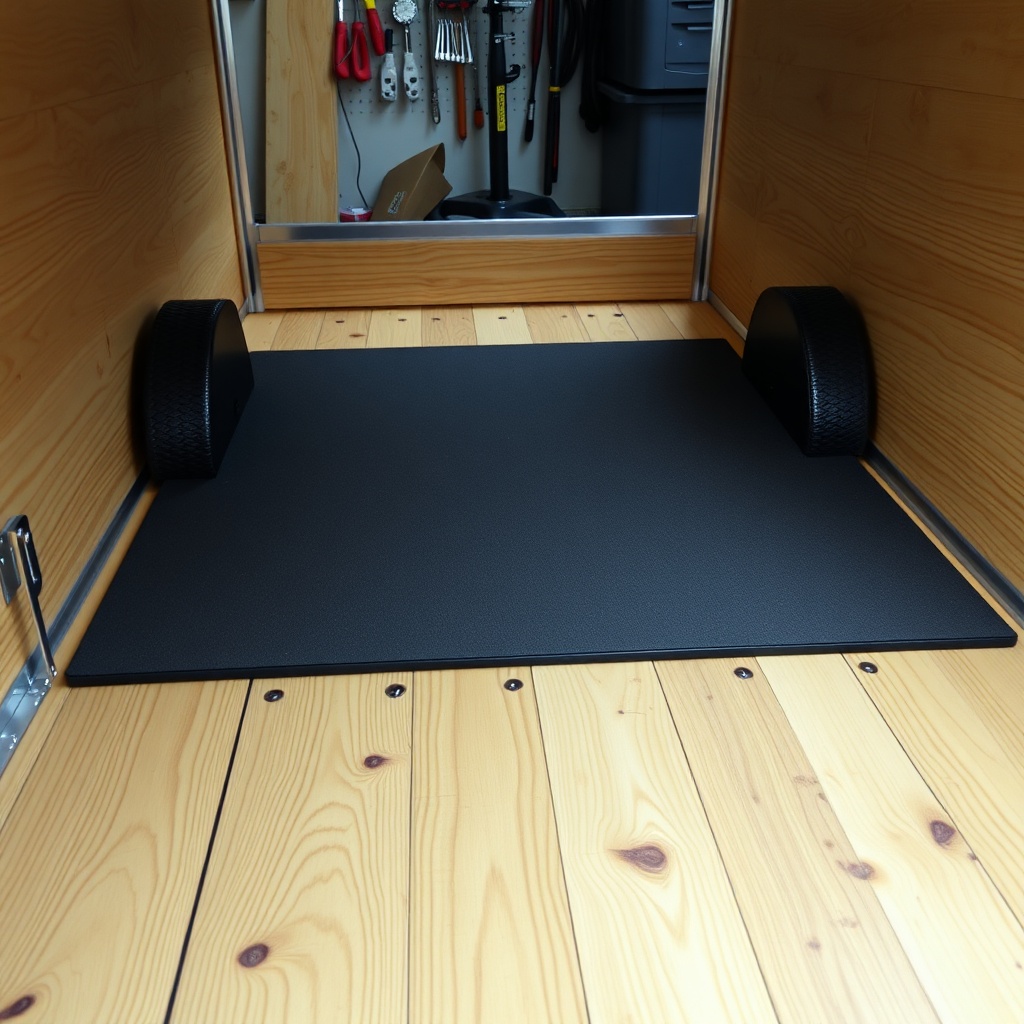
The 5×10 PJ trailer typically features a treated pine wood floor bolted to steel crossmembers. Moisture seeps through the wood and sits against the steel, creating a galvanic corrosion cell. To prevent this: sweep out dirt and gravel after every use, then rinse the floor with a pressure washer, but avoid blasting water directly at the bolt heads or steel edges. Once a month, lift the matting or rubber bedliner (if used) and inspect the steel contact surfaces. For stubborn rust beginning around bolt holes, apply a phosphoric acid rust converter like Corroseal, then prime and paint. Pro tip: install a heavy-duty rubber mat with drainage holes—this reduces moisture pooling between wood and metal. A dry floor equals a dry frame. For deeper details on floor care, refer to PJ Trailers 5×10 Maintenance and Rust Prevention Guide.
How Often Should You Inspect and Touch Up the Paint on a PJ 5×10?
Paint touch-ups are a minor job that prevents major damage. Inspect your PJ Trailers 5×10 after every long trip or at least every two weeks. Look for stone chips on the front panel, scrape marks on the fenders, and rust near the hitch coupler. Use a wire brush to remove loose rust, then apply a rust-inhibitive primer (e.g., Rust-Oleum Rust Reformer) followed by a matching topcoat. PJ’s factory color is often a charcoal grey or black gloss. Keep a small touch-up bottle on hand. The table below shows a severity scale for common rust areas on the 5×10 model.
| Location | Mild Rust (Surface) | Moderate Rust (Pitting) | Severe Rust (Structural) |
|---|---|---|---|
| Frame rails | Orange dust, wipes off | Small pits, flaking | Thinning metal, cracks |
| Fender edges | Surface discoloration | Raised blisters | Holes, sharp edges |
| Hitch coupler | Rust spots on weld | Hardened deposits | Worn locking teeth |
| Spring hangers | Light coating | Scaling around bolts | Elongated bolt holes |
| Floor bolt heads | Tiny red rings | Bolt head crumbling | Bolt snaps under torque |
For mild cases, a simple sand-and-paint is sufficient. Moderate rust calls for grinding and filling. Severe rust means replacement—catch it early.
Is DIY Rust Proofing Enough, or Should You Hire a Professional for a PJ 5×10?
A determined DIY owner can effectively rust-proof a PJ Trailers 5×10 using spray cans and elbow grease. However, professional rust-proofing shops offer advantages: they use industrial-grade spray equipment, high-pressure wash and degrease the underside, and can apply thicker coatings like Krown T40 or Rust Check. Cost for a professional treatment on a 5×10 trailer ranges from $150 to $300 per year depending on your location. DIY costs about $80 for materials but requires four to six hours of work, including crawling underneath and protecting the wood floor from overspray. If your trailer is used in a heavy salt area (northern states, Canada), professional application every two years plus DIY touch-ups in between is the balanced strategy. For hitch-specific protection, see PJ Trailers 5×10 Towing Hitch Setup Guide.
What Are the Best Practices for Storing a PJ Trailers 5×10 to Minimize Rust?
Storage location is critical. Ideally, keep your PJ 5×10 indoors or under a carport. If only outdoor storage is available, use a breathable trailer cover—not a tarp, which traps condensation. Elevate the tongue on a jack stand so any water runs off, not pooling. Park on gravel or concrete, not grass or dirt, to reduce humidity exposure. During long storage (over 30 days), remove the battery (if equipped with electric brakes) and plug the wiring connector with a dielectric grease-filled cap. Open the tailgate slightly to allow airflow under the wood floor. Periodically move the trailer a few feet to prevent flat spots on tires and break moisture adhesion. Spray a light coat of WD-40 or similar on all hinges and latch mechanisms.
What Owners Say About Long-Term Rust Protection on the PJ 5×10
Long-time owners on trailer forums like TrailerTalk and Pirate4x4 consistently report that proactive maintenance determines the 10-year look of a PJ Trailers 5×10. One owner from Michigan stated: “I wash mine after every salt run, spray Fluid Film in the frame rails each fall, and touch up rock chips immediately. After six winters, the frame still looks new.” Another from the Pacific Northwest noted that “the wood floor was the weak link—replacing it with aluminum after five years stopped the subframe rust issue.” Many emphasize that the factory powder coat is decent but not bulletproof, and annual undercoating is cheap insurance. The consensus: a few hours per year saves hundreds in frame repairs.
Frequently Asked Questions about PJ Trailers 5×10 Rust Prevention
1. Can I use a pressure washer on the brakes of my PJ 5×10?
No. Direct high-pressure water on brake assemblies (especially electric brakes) can force water into sealed bearings and drum cavities. Instead, use a low-pressure rinse or a spray bottle with a mild degreaser. Dry the brakes by driving briefly or using compressed air.
2. Does the PJ Trailers 5×10 come with a galvanized frame option?
Standard PJ 5×10 models use powder-coated steel. A galvanized frame is available as a factory option on certain custom orders but adds significantly to cost. If you live in a rust-prone area, it’s worth requesting a quote for a galvanized upgrade.
3. How often should I replace the wood floor to prevent steel corrosion?
Treated pine floors typically last 5–8 years with proper care. Replace when the wood becomes soft, splits, or when bolts no longer tighten flush. An aluminum floor lasts the trailer’s lifetime but increases weight and initial price by roughly 30%.
4. Is it safe to park my PJ 5×10 on wet grass?
Not recommended. Grass retains moisture and creates a humid microclimate underneath the trailer. This drastically accelerates rust on the underside components, especially the axle and spring hangers. Always park on gravel or a concrete slab.
5. Are silicone sprays effective for rust prevention on a PJ trailer?
Silicone sprays repel water but do not penetrate or displace moisture well. They are better for protecting rubber seals and plastic parts. For steel protection, use a dedicated undercoating or corrosion inhibitor like CorrosionX or Boeshield T-9.
6. Do LED lights reduce rust around the wiring on a 5×10 PJ trailer?
Indirectly, yes. LED lights draw less current, reducing heat buildup that can attract moisture around connections. More importantly, seal all wiring splices with heat-shrink tubing and dielectric grease to prevent corrosion at junction points. For towing safety, see PJ Trailers 5×10 Towing Hitch Setup: A Step-by-Step Guide.